Ultimate Guide to Pickleball Scoring Rules in 2026: Complete Breakdown for Beginners and Pros
Pickleball scoring often confuses new players because it’s unique—points aren’t scored the same way as in tennis or other racket sports. The good news is that once you understand the basics, it becomes second nature.
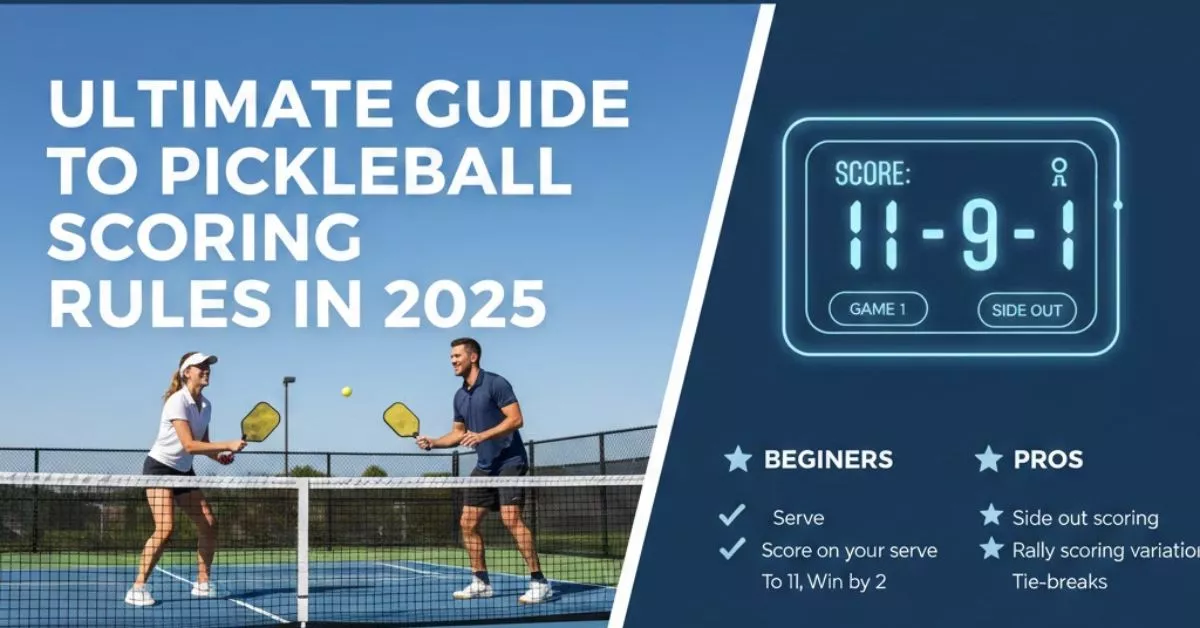
How does pickleball scoring work? In the most common traditional side-out system, only the serving team can score a point by winning a rally. Games typically go to 11 points, and you must win by at least 2.
As of 2025, USA Pickleball has introduced a provisional rally scoring option for certain formats. In rally scoring, the team that wins the rally gets a point, no matter who served—except the final game-winning point, which must still be scored by the serving team.
This guide covers the full pickleball scoring system, including both methods, singles and doubles differences, and the latest official updates from the USA Pickleball 2025 Rulebook.
Quick Comparison: Side-Out vs. Rally Scoring
Traditional side-out scoring remains the standard for most play, including all major 2025 tournaments like Nationals and Golden Ticket events. Rally scoring is optional and provisional, mainly for round-robins, team events, and some singles play.
Here’s a clear side-by-side look:
| Feature | Traditional Side-Out Scoring | Rally Scoring (2025 Provisional) |
|---|---|---|
| Points scored when | Only on your serve when winning the rally | On every rally (except game-winning point) |
| Score call in doubles | 3 numbers: Your score – Opponent’s – Server (1 or 2) | 2 numbers: Your score – Opponent’s |
| Used in | Most recreational and all high-level tournaments | Optional for round-robins, team play, singles |
| Game-winning point | Only by serving team | Only by serving team |
| Typical game length | To 11, 15, or 21 (win by 2) | Same, but games often feel faster |
(Source: Official USA Pickleball 2025 Rulebook)
This comparison helps highlight why rally scoring can make games more exciting and quicker, while traditional keeps the strategic focus on holding serve.
How Scoring Works in Doubles (Traditional Side-Out – Most Common)
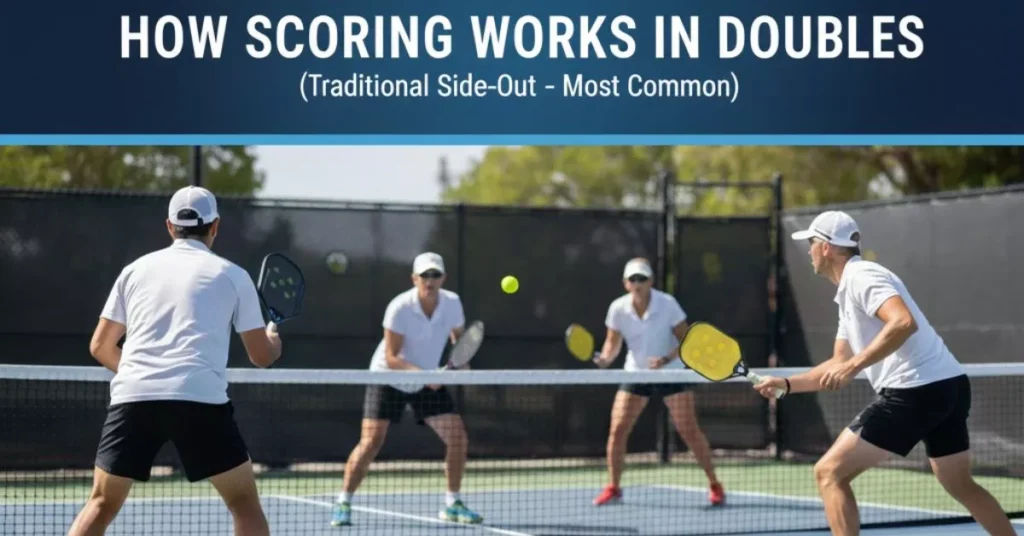
Doubles is the favorite format for most players because it’s social and strategic. In traditional side-out scoring—the one you’ll use 99% of the time—the scoring in pickleball follows a specific pattern to keep things fair.
Before each serve, announce three numbers loudly:
- Your team’s score.
- The opponents’ score.
- The server number (1 or 2 for your team).
Every game starts at 0-0-2. This unusual start means the first server is “server 2,” ensuring both teams get equal serving chances early if the initial serve is lost quickly.
Your team serves and scores points until you fault (lose the rally), causing a side out. Then your partner serves. After another fault, serve passes to the opponents.
Positioning is key: Serve from the right side when your team’s score is even (0, 2, 4…), and from the left when odd (1, 3, 5…). Players switch sides only after scoring a point.
Step-by-step example:
- Start: 0-0-2. Team A serves from right, wins rally → 1-0-2 (switch to left side).
- Wins again → 2-0-2 (back to right).
- Faults → 2-0-1 (partner serves from right).
- Partner scores three points → 5-0-1.
- Faults → side out. Opponents serve at 5-0-1.
This system rewards strong serving teams while giving underdogs chances through side outs. Practice calling scores out loud—it prevents disputes and builds confidence.
Singles Scoring Rules (Traditional Side-Out)
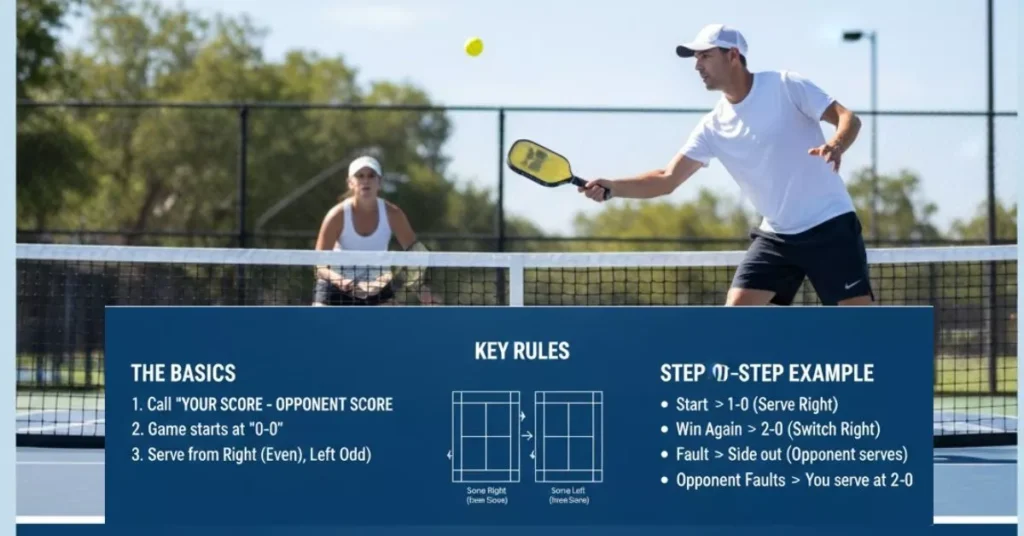
Singles pickleball is faster-paced and more athletic, with simpler scoring that eliminates partner complications.
You call just two numbers: Your score first (as server), then the opponent’s.
Games start at 0-0, with the server beginning on the right side (even score position).
If you win a rally while serving, you score a point and switch sides. If you lose, it’s a side out—no point, and the opponent serves from their correct side.
The same even-right, odd-left rule applies based on the server’s score.
Example flow:
- You serve at 0-0 from right, win → 1-0 (switch to left).
- Win again → 2-0 (back to right).
- Fault → side out at 2-0. Opponent serves.
- If opponent faults immediately, serve returns to you at 2-0.
Singles emphasizes consistency because every fault costs potential points directly. In 2025, rally scoring is more widely allowed in singles events, making games even quicker for tournament play.
This format is great for building individual skills before jumping into doubles.
2025 Rally Scoring: The New Provisional Option
The biggest change in 2025 is the provisional introduction of rally scoring, responding to player feedback for faster, more spectator-friendly games.
Rally scoring is optional—tournament directors choose it for round-robins, team events, recreational play, and singles double-elimination. It’s not permitted in doubles double-elimination, Golden Ticket events, or the 2025 Nationals, where traditional side-out remains mandatory.
Key mechanics:
- Point awarded to the rally winner every time (serving or receiving).
- Doubles score call uses only two numbers—no server 1/2.
- Teams switch sides after scoring a point.
- Crucial exception: The game-winning point must be scored while serving. If the receiving team wins the rally at deuce or game point, it’s just a side out—no point added.
This hybrid keeps some traditional strategy while speeding play. Pros: Shorter matches, constant pressure. Cons: Less reward for strong servers.
Check with your local group or tournament—most casual play sticks with side-out for now.
Tournament and Advanced Variations
Tournament scoring builds on basics but adds structure for competition.
Most events use traditional side-out: Games to 11 (win by 2), often best-of-3 matches. Some go to 15 or 21 for finals.
With 2025 rally scoring optional in certain formats, expect variety—always read event rules.
Advanced tips:
- Round-robins may carry over points or use rally for tiebreakers.
- Pro tours (PPA, APP) sometimes experiment further—MLP popularized rally elements.
- Always win by 2; no win-by-1 caps unless specified.
Understanding variations helps you adapt quickly in leagues or travel play.
Practical Tips for Keeping Score
Good scorekeeping prevents arguments and keeps games flowing smoothly.
Always announce the full score before serving—it’s required and courteous.
Mnemonics help: “Even = right side” for your team’s score; “Start at 0-0-2” for doubles fairness.
Common tools:
- Physical scoreboards or flip cards.
- Apps like DUPR (tracks ratings too) or SwingVision (video analysis).
- Simple tally sheets with columns for each team.
In groups, assign one non-player to track if possible.
Practice at home: Simulate serves and call scores aloud. These habits make you a better partner and avoid beginner mistakes.
How Scoring Changes Your Strategy
Scoring directly shapes how you play—understanding this elevates your game.
In traditional side-out, focus on safe returns and forcing errors when receiving—you can’t lose points on defense. Strong servers dominate by holding long runs.
Rally scoring flips it: Every rally counts, so play aggressively. Unforced errors hurt more; third-shot drops and dinks become riskier.
Positioning ties in: Correct sides prevent faults that cost points or serve.
Beginners: Master defense first in side-out. Advanced players: Adapt aggression based on format.
This strategic layer is why pickleball stays addictive—scoring forces smart, patient play.
Top Beginner Mistakes to Avoid
Even experienced players slip up on scoring—here are the most common pitfalls and fixes.
Forgetting side switches after points—leads to wrong-position faults. Fix: Check “even right, odd left” every time.
Calling wrong server number in doubles—confuses everyone. Fix: Track who started serving for your team.
Scoring on receive in traditional—doesn’t happen! Only serving team points.
Not calling score clearly—causes replays. Always loud and in order.
In rally scoring: Forgetting only two numbers or that game point needs serve.
Other traps: Ignoring the 0-0-2 start or win-by-2 rule (games can go to 15+ if tied).
Avoid these by practicing dry runs before real games.
Conclusion: Mastering Pickleball Scoring for Better Games
Pickleball scoring might seem complicated at first glance, but breaking it down shows it’s logical and fair. Traditional side-out rewards strong serving and patient defense, creating those epic long rallies we love, while the new 2025 provisional rally option adds excitement and speed for certain events—perfect for spectators and time-constrained play. Whether you’re calling three numbers in doubles or two in singles, remembering basics like “even right, odd left,” starting at 0-0-2, and winning by 2 keeps everything smooth.
This guide gives you the full picture: from quick comparisons and step-by-step examples to strategy impacts, common mistakes, and practical tips. With the official USA Pickleball updates in mind, you’re ready for any court in 2025—recreational, league, or tournament.
The real key? Practice. Call scores out loud during warm-ups, play both formats when available, and soon it’ll feel natural. Scoring isn’t just rules—it’s the heartbeat of strategy that makes every point meaningful. Grab your paddle, find a partner, hit the court, and enjoy the game. Pickleball’s growth comes from players like you understanding and sharing these details. Have fun out there!
(Source: Official USA Pickleball 2025 Rulebook)
FAQs About Pickleball Scoring:
How is scoring done in pickleball?
Pickleball uses side-out scoring as the standard method, where only the serving team can score points by winning a rally. If the receiving team wins, they gain the serve but no point. Games typically go to 11 points, and you must win by 2. In doubles, the score is called with three numbers: serving team’s score, receiving team’s score, and server number (1 or 2). Singles uses two numbers.
In 2025, rally scoring is a provisional option for certain formats like round-robins, team events, and singles. Here, a point is awarded on every rally to the winning team, regardless of who served—except the game-winning point must still be scored while serving. Rally scoring uses two numbers in doubles and speeds up play.
Key rules: Even scores mean serve from the right side; odd from the left. Doubles starts at 0-0-2 for fairness. This system encourages strategy—hold serve in traditional, play aggressive in rally. Always reference the official USA Pickleball 2025 Rulebook for event-specific details. Mastering scoring prevents confusion and enhances enjoyment on the court.
What are the 5 rules of pickleball?
Pickleball combines elements of tennis, badminton, and ping-pong, with these five core rules forming the foundation for beginners:
- The Double-Bounce Rule — The serve must bounce once on the receiver’s side, and the return must bounce once before the serving team can volley. This extends rallies and prevents serve-and-volley dominance.
- Non-Volley Zone (Kitchen) Rule — No volleying (hitting without bounce) within the 7-foot zone on either side of the net. You can enter the kitchen for groundstrokes, but momentum can’t carry you in after a volley.
- Serving Rules — Underhand serves from behind the baseline, diagonally crosscourt. The ball must clear the net and land in the opposite diagonal area (not the kitchen).
- Scoring — Only the serving side scores (traditional); games to 11, win by 2.
- Faults and Out of Bounds — Ball out, net faults on serve, or violations end the rally.
These promote long rallies, strategy, and fairness. The 2025 rules add optional rally scoring but keep these basics intact. Practice them for quick improvement!
Why does pickleball start at 0-0-2?
In doubles pickleball—the most common format—the game always starts with the score called as 0-0-2. This isn’t a mistake; it’s a deliberate rule for fairness.
The third number indicates the server: 1 for the first server on a team’s turn, 2 for the second (partner). Normally, each team gets two servers per service turn. But at the very start, the first serving team only gets one server—if they fault immediately, serve passes right away (side out).
By calling it “2,” the initial server is treated as the “second” server. This balances the game: the team serving first doesn’t get an extra advantage, while the receiving team gets a quick chance to serve.
After the first side out, normal play resumes with two servers per team. Singles starts at 0-0 (no third number). This “first server exception” in the 2025 USA Pickleball Rulebook ensures equity from the opening rally. It’s quirky but prevents one team from dominating early!
Is pickleball played to 11 or 15?
Standard pickleball games are played to 11 points, and you must win by at least 2 (so games can extend to 12-10, 13-11, etc.). This is the norm for recreational play and most matches.
In tournaments, games may go to 15 or 21 points (still win by 2), especially in finals, best-of series, or when time allows longer play. Matches are often best 2 out of 3 games to 11.
The 2025 rules keep this flexible—tournament directors decide based on format. Rally scoring (provisional option) often uses higher targets like 15 or 21 since points accumulate faster.
No matter the target, the win-by-2 rule prevents ties. Recreational groups sometimes play single games to 15 for variety. Check event rules, but 11 is the everyday standard per the USA Pickleball Rulebook.
What is the golden rule pickleball?
The golden rule in pickleball is often the non-volley zone (kitchen) rule: You cannot volley the ball (hit it in the air without bouncing) while standing in the 7-foot kitchen area on either side of the net. This includes momentum carrying you into the kitchen after a volley—even if the ball is dead.
This rule prevents aggressive smashes close to the net, promoting longer rallies, safety, and strategy. It’s called “golden” because violating it is a common fault and shifts momentum.
Some players refer to broader “golden rules” like sportsmanship (treat others as you’d want to be treated) or patience in dinking. But officially, the kitchen no-volley is the core unbreakable principle in the 2025 Rulebook. Master it to avoid easy points for opponents!
What does it mean to dink in pickleball?
A dink in pickleball is a soft, controlled shot hit just over the net, arcing gently to land in the opponent’s non-volley zone (kitchen). It’s usually executed from near the kitchen line after a bounce, with little pace or spin—aiming low and short to force an upward return.
Dinking neutralizes power players, draws opponents forward, and sets up attacks. It’s a patience game: crosscourt dinks pull players wide, while straight dinks limit angles.
Pros dink extensively in rallies, waiting for pop-ups to smash. Beginners often rush out of dinks—stay patient! Practice a continental grip, open paddle face, and soft lift for consistency.
In 2025 play, dinking remains key strategy, especially against aggressive styles. It’s not “defensive”—great dinks win points by inducing errors. Master dinking to control the kitchen and elevate your game!